PG STUDIOS
AI-Native Production

What “AI-native” actually means in a production studio

Not prompt-to-video. A pipeline where AI accelerates specific stages under human direction — and where the outputs are structured for reuse.
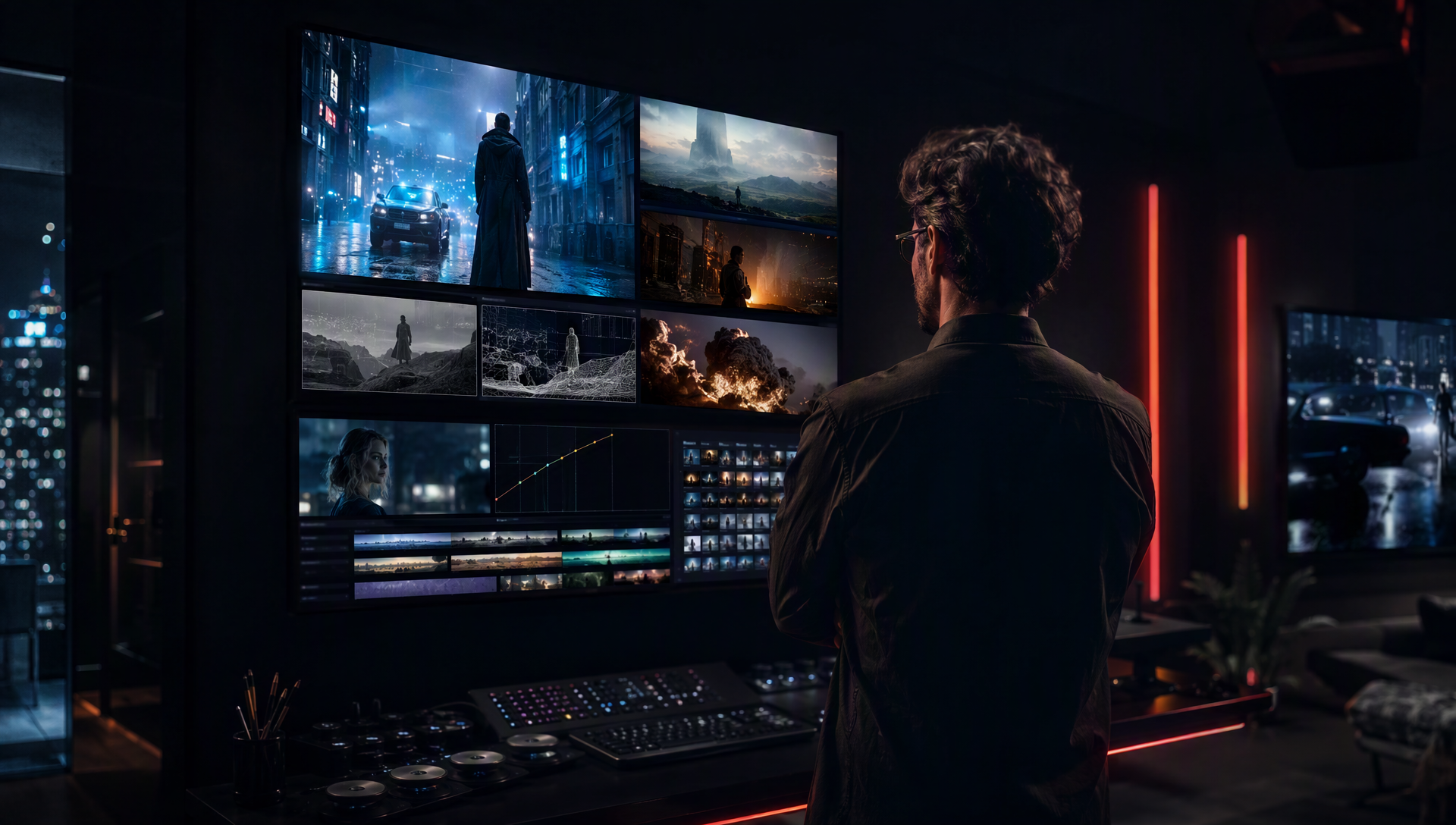
AI-Native Production
AI-native production means intelligent systems are built into the workflow while creative direction remains human-led. At PG Studios, AI supports ideation, boards, versioning, cleanup, asset preparation, and production coordination so teams can move faster without losing editorial control, cultural accuracy, or craft quality. AI-native is a production model, not a shortcut AI-native production is often confused with AI-generated content. The difference is significant. AI-generated content focuses on creating an output with a tool. AI-native production redesigns the entire workflow around the strengths of both intelligent systems and experienced production teams. The objective is not to automate every creative decision. It is to identify the stages where AI can reduce repetitive work, expand creative exploration, or improve consistency—then place those capabilities inside a professionally managed pipeline. The result is a process that remains directed, reviewable, and ready to scale. Where AI fits in the pipeline Different stages of production require different levels of automation and human judgment. During early development, AI can help teams explore visual directions, test concepts, prepare references, and build preliminary boards or animatics. This allows more ideas to be considered before the production commits to a final direction. During production, intelligent tools can support tasks such as asset organization, cleanup, in-betweening, upscaling, and style-consistent variation. They can also help teams produce multiple formats or market-specific versions without rebuilding every asset from the beginning. In post-production, AI can assist with repetitive technical work while editors, artists, and supervisors remain responsible for pacing, performance, composition, sound, and the final creative result. Each use of AI should have a clear purpose. If it does not improve speed, consistency, scalability, or creative flexibility, it does not belong in the pipeline. Human direction remains the control layer Creative work depends on judgment. A production team understands the intention behind a scene, the emotional weight of a performance, the expectations of an audience, and the visual language of a brand. AI systems do not replace that understanding. Human review is therefore not a final correction step. It is present throughout the process—from defining the brief and selecting references to evaluating generated material, maintaining continuity, and approving the final master. This is especially important when a project involves recognizable people, protected brands, culturally sensitive subjects, or synthetic media. Clear approval standards, source tracking, and disclosure practices must be built into the workflow from the beginning. Cultural accuracy cannot be automated For Arabic content, technical quality alone is not enough. Dialect, geography, social context, visual details, performance style, and audience expectations can change the meaning of a scene. Content intended for the Gulf may require different creative decisions from content developed for Egypt, the Levant, or a broader Arabic-speaking audience. AI may accelerate research, localization, versioning, and voice or visual development, but culturally informed professionals must guide those systems. Native creative direction and regional review remain essential to producing work that feels authentic rather than translated. The goal is not simply to generate Arabic content. It is to create work that belongs in its market. The output should keep working after delivery A traditional production may conclude with a collection of final masters. An AI-native production should deliver more. When assets are properly structured, documented, and tagged, they can support future campaigns, new formats, localization, interactive experiences, and approved AI applications. Layered artwork, clean plates, isolated audio, character references, style guides, and production metadata all extend the value of the original work. This turns production from a one-time process into a reusable creative system. It also gives clients greater control. Instead of returning to the beginning for every adaptation, teams can work from an organized foundation designed for controlled reuse. What good AI-native production looks like The strongest AI-native workflows are not defined by how much AI they use. They are defined by how deliberately they use it. A successful pipeline should provide: • Clear human ownership of creative decisions • Consistent quality across scenes, assets, and versions • Traceable review and approval stages • Responsible handling of synthetic media • Culturally informed direction and localization • Structured assets prepared for future reuse • Final masters reviewed by experienced production professionals AI-native production is ultimately about building a better production system: faster where speed matters, controlled where judgment matters, and structured for whatever comes next.

Let’s build the next generation of visual media.